
Yes, headaches can cause teeth pain. The pain is often not coming from the tooth itself but from shared nerves, jaw muscles, sinus pressure, or conditions like migraines that make your brain interpret pain signals in the teeth and face.
This is why some people visit a dentist convinced they have a bad tooth, only to discover their teeth are healthy. The source is somewhere else.
The tricky part is that tooth pain and headache-related facial pain can feel almost identical. A dull ache in the upper teeth, pressure around the cheeks, sensitivity when biting, or a throbbing sensation can all happen without an actual dental problem.
Understanding where the pain is coming from saves time, money, and unnecessary dental procedures.
How Can Headaches Cause Teeth Pain?
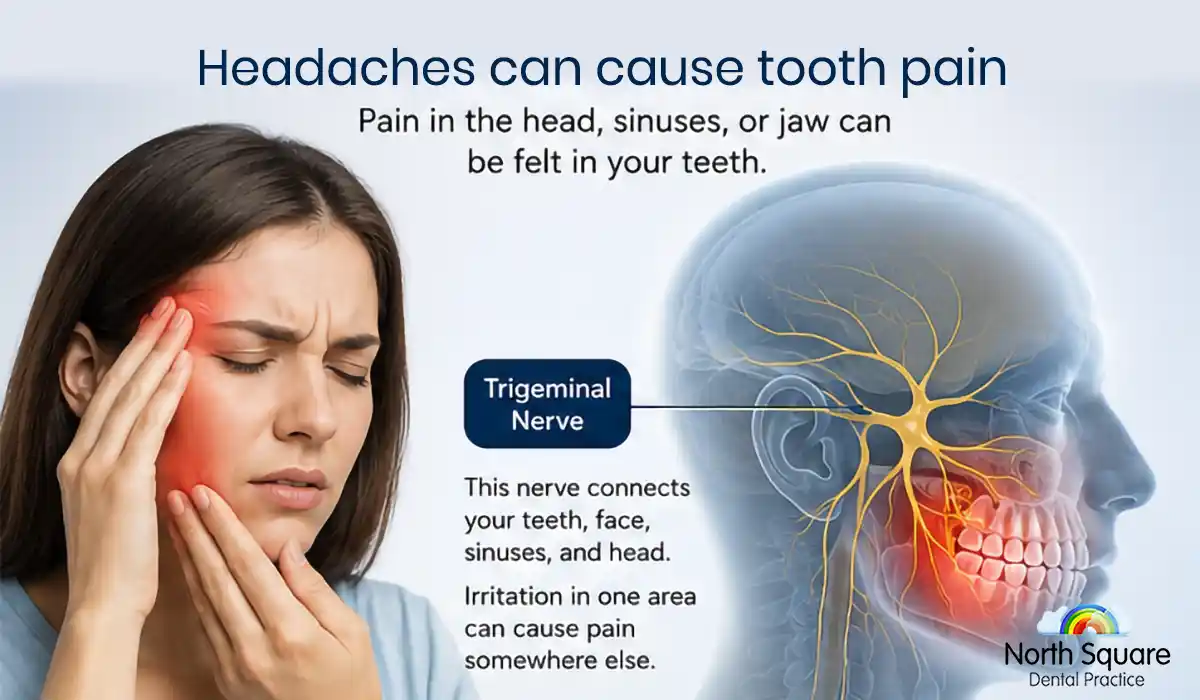
The connection between headaches and teeth pain comes down to the nervous system, especially the trigeminal nerve.
The trigeminal nerve is one of the largest nerves in the head. It carries sensation from your teeth, gums, jaw, face, forehead, and parts of the scalp. When this nerve becomes irritated, your brain can struggle to identify the exact source of the problem.
A headache may start in one area but be felt somewhere completely different.
For example:
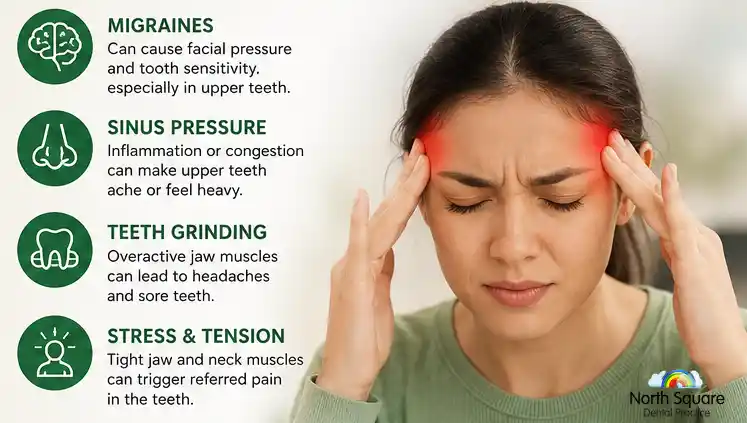
- A migraine may create pain that feels like upper tooth pressure.
- Jaw muscle tension from stress can create tooth-like aching.
- Sinus inflammation can make several upper teeth feel painful.
- Teeth grinding during sleep can trigger morning headaches and sore teeth.
This is called referred pain. The brain receives pain signals from connected areas and sometimes “mislabels” the location.
Headache Types That Can Feel Like Tooth Pain
Not every headache causes dental discomfort, but several types commonly overlap with tooth sensations.
Migraines and Tooth Pain
Migraines are one of the most overlooked causes of tooth-like pain.
A migraine does not always feel like a classic headache. Some people experience:
- Facial pressure
- Pain around the eyes
- Jaw discomfort
- Sensitivity in upper teeth
- Pain on one side of the face
The reason is the trigeminal nerve. During a migraine attack, this nerve pathway becomes highly active and can send pain signals into areas connected with the teeth.
A patient may point directly to one tooth and say, “This tooth feels infected,” even though there is no cavity, crack, or infection.
The American Migraine Foundation explains that migraine attacks can involve the trigeminal nerve, which may contribute to facial pain and symptoms that feel similar to dental discomfort.
Sinus Headaches and Upper Tooth Pain
Sinus pressure is probably one of the most common reasons people mistake headaches for tooth problems.
Your upper back teeth sit very close to the maxillary sinuses. When these spaces become inflamed from allergies, infection, or congestion, pressure can build around the roots of nearby teeth.
Typical signs include:
- Pain in multiple upper teeth
- Worse discomfort when bending forward
- Facial pressure
- Blocked nose
- Feeling like your teeth are “heavy”
A true tooth problem usually affects one specific tooth. Sinus-related tooth pain often affects several teeth at once.
According to Mayo Clinic Sinusitis Information, sinus inflammation can create facial pressure and pain that may spread around the cheeks, jaw, and upper teeth.
Also, a detailed explanation of the connection between sinusitis and upper tooth pain is covered by Queen’s Gate Dental Practice in their guide Does Sinusitis Cause Teeth Pain? Understanding the Connection.
Tension Headaches and Jaw-Related Tooth Pain
Stress does not only affect your mind. It affects your muscles.
Many people tighten their jaw without noticing. They may clench while working, driving, concentrating, or sleeping.
Over time, this can overload:
- Jaw muscles
- The temporomandibular joint (TMJ)
- The tissues around teeth
The result can feel like:
- Aching teeth
- Pressure when biting
- Headaches near the temples
- Jaw stiffness
- Ear discomfort
A common clue is waking up with a headache or sore jaw. That often points toward nighttime grinding or clenching.
The Hidden Link: Teeth Grinding and Morning Headaches
A lot of people grind their teeth and have no idea they are doing it.
Sleep bruxism (teeth grinding during sleep) can put enormous force on your teeth. The pressure is much higher than normal chewing forces.
Over time, it may lead to:
- Tooth sensitivity
- Cracked teeth
- Worn enamel
- Jaw soreness
- Morning headaches
The interesting part is that grinding does not always create obvious tooth damage immediately. Sometimes the first symptom is simply waking up feeling like your teeth and head have been under pressure all night.
How to Tell If Tooth Pain Is Actually Coming From a Headache
There are some clues that can help separate dental pain from headache-related pain.
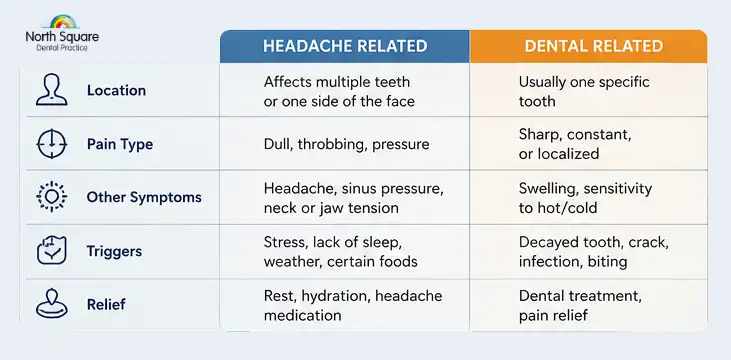
| Sign | More likely headache-related | More likely dental issue |
|---|---|---|
| Pain location | Several teeth or whole side of face | One specific tooth |
| Pain changes with stress | Common | Less common |
| Head pressure present | Often | Sometimes |
| Pain when biting | Possible with jaw issues | Common with cracked/infected tooth |
| Sensitivity to hot/cold | Less typical | Common |
| Swelling | Rare | Possible with infection |
This is not a replacement for a dental examination, but it helps explain why some “toothaches” disappear when headaches improve.
Can a Headache Cause Tooth Pain Without a Cavity?
Yes.
A healthy tooth can hurt because the nerves around it are connected to the same pain pathways involved in headaches.
This is one reason dentists often ask questions beyond the tooth itself:
- When did the pain start?
- Is it worse during stress?
- Do you wake with jaw pain?
- Is there facial pressure?
- Does the pain move around?
The pattern matters.
A cavity usually behaves like a local problem. Nerve-related or headache-related pain often behaves differently.
What Helps When Headaches Are Causing Teeth Pain?
The right solution depends on the actual trigger.
For Migraine-Related Tooth Pain
Helpful approaches may include:
- Identifying migraine triggers
- Staying hydrated
- Managing sleep patterns
- Treating migraines early
- Discussing medication options with a healthcare professional
Waiting until a migraine becomes severe can make treatment harder.
For Sinus-Related Tooth Pain
People often find relief from:
- Managing congestion
- Treating allergies
- Drinking enough fluids
- Using appropriate sinus treatments recommended by a healthcare provider
If symptoms include fever, severe facial pain, or symptoms that persist, medical advice is important.
For Jaw Tension and Grinding
Small changes can make a surprising difference:
- Avoid chewing gum excessively
- Notice daytime jaw clenching
- Keep your teeth slightly apart when resting
- Practice jaw relaxation
- Consider a dentist-made night guard if grinding is confirmed
Many people hold tension in their jaw the same way others hold tension in their shoulders.
When Should You See a Dentist?
Do not assume every toothache is a headache.
A dental check is important if you have:
- Pain focused on one tooth
- Swelling around the gums
- A broken or cracked tooth
- Severe sensitivity
- Pain that wakes you at night
- Pain that gets worse over time
Dental infections can sometimes feel like facial pain, so ignoring symptoms is not a good idea.
A Detail Many People Miss: Pain Location Is Not Always the Problem Location
One of the biggest mistakes people make is assuming “where it hurts” equals “where the problem is.”
The human nervous system does not work like a GPS.
A person can have:
- A jaw muscle problem that feels like tooth pain
- A sinus problem that feels like a tooth infection
- A migraine that feels like facial pain
The body is connected. The symptoms often overlap.
That is why a good diagnosis is less about guessing and more about looking at the full pattern.
Frequently Asked Questions
Yes. Nerve pathways can make headache-related pain feel like it is coming from a single tooth, even when the tooth is healthy.
Yes. Migraines can activate facial nerves that create tooth-like pain, pressure, or sensitivity.
A dentist is usually a good first step to rule out dental causes. If your teeth are healthy, headache or nerve-related causes may need evaluation.
Sinus inflammation can put pressure near the roots of upper teeth, creating a toothache-like feeling.
Yes. Stress often increases jaw clenching and muscle tension, which can trigger both headaches and tooth discomfort.
Why Choose North Square Dental Practice?
Our dental team focus on finding the real reason behind your dental discomfort rather than simply treating the symptom. Tooth pain that feels unusual, spreads into the face, or comes with headaches needs careful assessment because the source is not always obvious.
A thorough dental examination can help identify whether the issue is related to decay, a damaged tooth, bite pressure, jaw tension, or something outside the tooth itself.
The team takes time to understand your symptoms, explain what is happening, and help you make an informed decision about treatment.
If you are dealing with tooth pain that may be connected to headaches, jaw tension, or ongoing discomfort, contact North Square Dental Practice to arrange an appointment and get a clearer answer about what is causing the pain.