
Yes, many dentists do recommend air flossers, especially for people who struggle with traditional string floss. They are not usually seen as a complete replacement for every type of flossing, but they can be a very effective tool for improving daily oral hygiene when used correctly.
The part many people miss is this: dentists are not obsessed with the product itself. They care about the result.
A person who uses an air flosser every day is often doing better than someone who owns regular floss but avoids using it because it feels uncomfortable, takes too long, or is difficult to handle.
That is why many dental professionals view air flossers as a practical option, not a magic solution.
What Is an Air Flosser and How Does It Work?
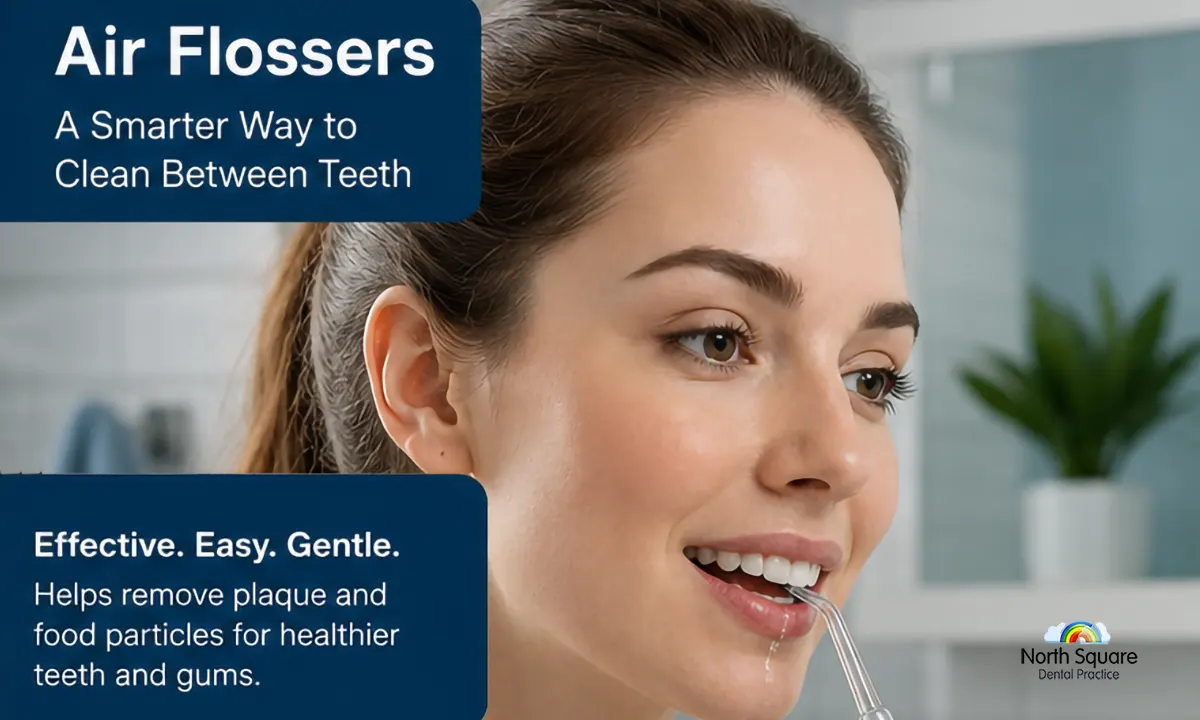
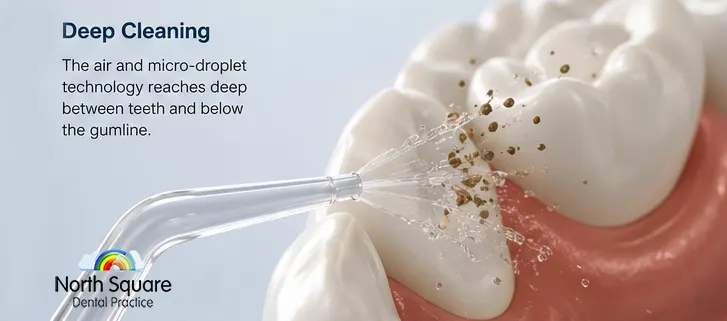
An air flosser uses a combination of air pressure and tiny bursts of water to clean between teeth. Instead of manually sliding floss up and down between each tooth, the device shoots a fast stream that helps remove food particles and disrupt bacteria around the gumline.
Traditional floss physically scrapes the sides of teeth.
An air flosser works more through pressure and movement.
This difference matters because plaque is sticky. If it has hardened into tartar, neither floss nor an air flosser will remove it. That requires professional cleaning.
The American Dental Association explains that cleaning between teeth is important because toothbrushes cannot reach those areas properly, which is why interdental cleaning tools are recommended.
Why Do Dentists Recommend Air Flossers?
Dentists usually recommend them for specific reasons, not because they are automatically better than floss.
1. They Help People Who Avoid Traditional Floss
This is probably the biggest reason.
Many patients know they should floss but simply do not.
Common complaints dentists hear:
- “My gums bleed when I floss.”
- “My hands hurt trying to reach my back teeth.”
- “I don’t have time.”
- “I forget.”
An air flosser removes some of the friction from the habit. The easier something feels, the more likely people are to actually do it.
A perfect flossing technique used once a month is not useful. A good enough method used daily is often better.
2. They Can Be Easier Around Dental Work
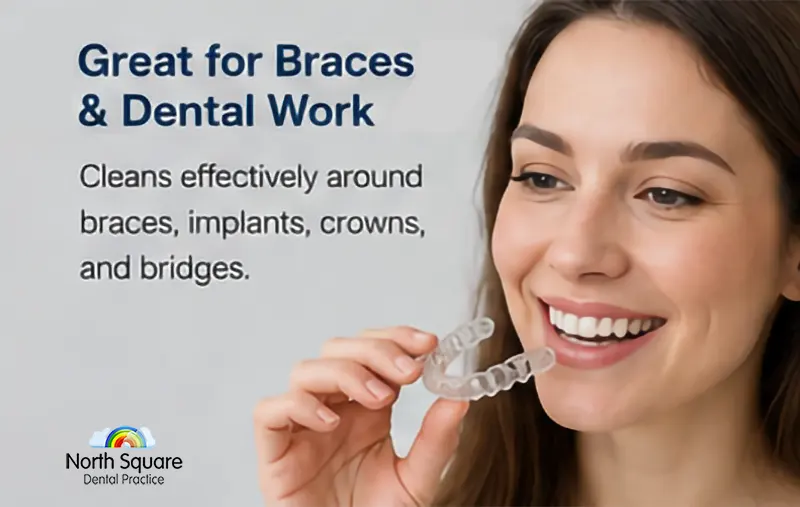
People with braces, bridges, crowns, implants, or tight spaces between teeth often find regular floss difficult.
An air flosser can make cleaning around these areas less frustrating.
Dentists often see this with older patients or people with reduced hand movement. The problem is not always motivation. Sometimes it is simply physical difficulty.
3. They Encourage Better Gum Care
Bleeding gums are usually a sign of inflammation caused by plaque buildup.
Some people stop flossing when they see blood because they assume flossing is damaging their gums.
Usually, the opposite is true.
Consistent cleaning can reduce inflammation over time. An air flosser may help people stay consistent without the discomfort they associate with string floss.
Are Air Flossers As Good As Regular Floss?
This is where the answer becomes more realistic.
No cleaning method is perfect for everyone.
Traditional floss has an advantage because it physically wraps around the tooth surface and can scrape plaque away from areas that are difficult to reach.
Air flossers have an advantage because they are easier and often improve compliance.
A simple comparison:
| Feature | Air Flosser | Traditional Floss |
|---|---|---|
| Easy for beginners | Very easy | Takes practice |
| Good for braces and dental work | Often helpful | Can be difficult |
| Removes sticky plaque | Helpful but technique matters | Very effective when done correctly |
| Encourages daily use | Usually better | Depends on the person |
| Requires learning technique | Minimal | More skill needed |
The “best” option is the one you will actually use properly.
Who Benefits Most From an Air Flosser?
Air flossers are especially useful for:
- People who rarely floss because they dislike the process
- Patients with braces
- People with crowns, bridges, or implants
- Anyone with limited hand movement
- People who get food stuck between teeth frequently
- Those who want a faster cleaning routine
They are also popular among people who have large gaps between teeth where food easily collects.
Who Might Still Need Traditional Floss?
Some situations still require more targeted cleaning.
For example:
If your dentist tells you that you have gum pockets or specific areas with plaque buildup, they may recommend traditional floss, interdental brushes, or other tools.
People with very tight contacts between teeth may also find regular floss more effective because it physically slides through those narrow areas.
Dental care is not one-size-fits-all.
A dentist may recommend different tools for different parts of your mouth.
The Mistake Many People Make With Air Flossers
People often assume the device does all the work.
It does not.
You still need to aim it correctly.
A common mistake is quickly passing the tip between teeth without focusing near the gumline. The goal is not just removing a piece of food after eating. The goal is reducing the bacterial buildup that causes cavities and gum problems.
A dentist or hygienist can often show the correct angle in less than a minute, and that small adjustment can make a noticeable difference.
Do Air Flossers Damage Gums?
When used correctly, air flossers are generally designed to be gentle on gums.
Some people feel sensitivity at first, especially if their gums are already irritated.
That does not always mean the device is causing harm. Sometimes healthier cleaning habits expose areas that were already inflamed.
However, if there is persistent pain, swelling, or heavy bleeding, it is worth discussing with a dental professional instead of simply changing products.
Air Flossers vs Water Flossers: Are They The Same?
Not exactly.
People often mix these terms.
An air flosser uses bursts of air and water.
A water flosser uses a continuous or pulsing stream of water under pressure.
Water flossers are often stronger and are frequently recommended for certain gum conditions or dental appliances.
Air flossers are usually chosen for convenience and speed.
Both can fit into a good oral hygiene routine.
What Dentists Actually Care About More Than the Device
The biggest factor is consistency.
A dentist would usually prefer:
- Daily air flossing done correctly
over
- Traditional floss sitting unused in a bathroom drawer
The device is only a tool.
The habit is what protects your teeth.
FAQ
Many dentists recommend them as an alternative for people who struggle with regular floss. They may not replace every cleaning method for every patient.
They can help remove plaque and food debris between teeth, but they cannot replace professional cleaning for hardened tartar.
They may help improve daily cleaning habits, but people with gum disease should follow their dentist’s specific recommendations.
Most people benefit from using it once daily as part of their regular oral hygiene routine.
For someone who avoids flossing, it can be worth it because a tool you actually use is more valuable than one you ignore.
Why Choose North Square Dental Practice?
At North Square Dental Practice, the focus is not simply recommending products. Good dental advice starts with understanding your teeth, gums, habits, and the problems you are trying to solve.
Whether you are unsure about using an air flosser, dealing with gum concerns, or looking for ways to improve your daily routine, professional guidance can help you choose the right approach instead of guessing.
The team takes a practical approach: helping patients understand what works for their individual situation and keeping oral care simple and realistic.
If you want advice about flossing options, gum health, or your overall dental care, contact North Square Dental Practice and book an appointment today.