

If you don’t brush your teeth, plaque builds up on your teeth and around the gumline. Over time, this can lead to bad breath, tartar, tooth decay, gum disease and, in severe cases, damage to the tissues supporting your teeth and tooth loss.
There isn’t a precise countdown that applies to everyone. One person may develop cavities relatively quickly, while another may first notice bleeding gums or persistent bad breath. Diet, saliva flow, fluoride exposure, smoking, existing dental problems and individual susceptibility all influence what happens.
The important point is simple: the longer plaque is left on your teeth, the greater the opportunity for dental problems to develop and become harder to treat.
Why Does Not Brushing Your Teeth Cause Problems?
Your mouth naturally contains bacteria. That’s normal. The problem starts when those bacteria form a sticky layer called dental plaque on the teeth.
Plaque is a bacterial biofilm, not simply leftover food. It continually reforms, which is why brushing needs to be a regular habit rather than something you do only when your teeth look dirty.
Brushing physically disrupts this plaque. Fluoride toothpaste adds another layer of protection by helping teeth resist decay. UK guidance recommends brushing at least twice a day with fluoride toothpaste, including last thing at night, and avoiding rinsing immediately after brushing so the fluoride remains around the teeth.
If plaque stays in place, some of it can eventually harden into tartar (calculus). This matters because established tartar cannot be reliably removed with a toothbrush at home.
What Happens If You Don’t Brush Your Teeth Over Time?
There is no medically accurate stopwatch for what happens after you stop brushing. Oral health develops differently from person to person. However, there is a general pattern.
After one missed brushing
Missing one brushing session is unlikely to cause permanent damage.
Plaque continues forming, though, and your teeth may feel coated or slightly fuzzy. Your breath may also become less fresh.
Bacteria in plaque can use sugars and other fermentable carbohydrates from food and drinks to produce acids. Repeated acid exposure can contribute to enamel mineral loss, while saliva and fluoride help protect the teeth.
If you miss a brushing, don’t try to compensate by scrubbing aggressively. Simply return to your normal routine.
After several days
After several days without effective cleaning, plaque becomes more noticeable, particularly around the gumline.
You may experience:
- A thicker coating on the teeth
- Bad breath
- An unpleasant taste
- Red or swollen gums
- Bleeding when brushing
- Food getting trapped more easily
- Rough areas that don’t disappear when you rinse
Bleeding can be confusing. People sometimes assume that brushing is damaging their gums when, in fact, plaque-related inflammation may already be present. when plaque builds up and irritates the gums. According to the NHS guidance on keeping your teeth clean, plaque that is not removed regularly can contribute to tooth decay and gum disease, affecting both your teeth and the supporting tissues.
If your gums bleed repeatedly, don’t simply stop brushing. Persistent bleeding is worth discussing with a dentist.
After about one month
After a month of poor oral hygiene, plaque may have remained around the gumline for long periods, increasing the likelihood of persistent gingivitis and tartar accumulation.
Your gums may look redder or swollen and bleed more easily.
You may also notice that some areas feel rough even after brushing. That’s where tartar becomes relevant. Brushing can remove soft plaque, but hardened calculus generally needs professional removal.
Not everyone will have obvious pain at this stage. That’s one reason waiting for a toothache isn’t a reliable way to judge your oral health.
After six months
After six months of consistently poor oral hygiene, the possible consequences depend heavily on your individual risk.
You may have persistent tartar, inflamed gums, tooth decay, sensitivity or periodontal disease.
Diet matters too. It isn’t only the total amount of sugar you consume; how frequently your teeth are exposed to sugar matters. Frequent sugary snacks and drinks give plaque bacteria repeated opportunities to produce acids.
Dry mouth can also change the picture because saliva is one of the mouth’s natural protective systems.
After one year or longer
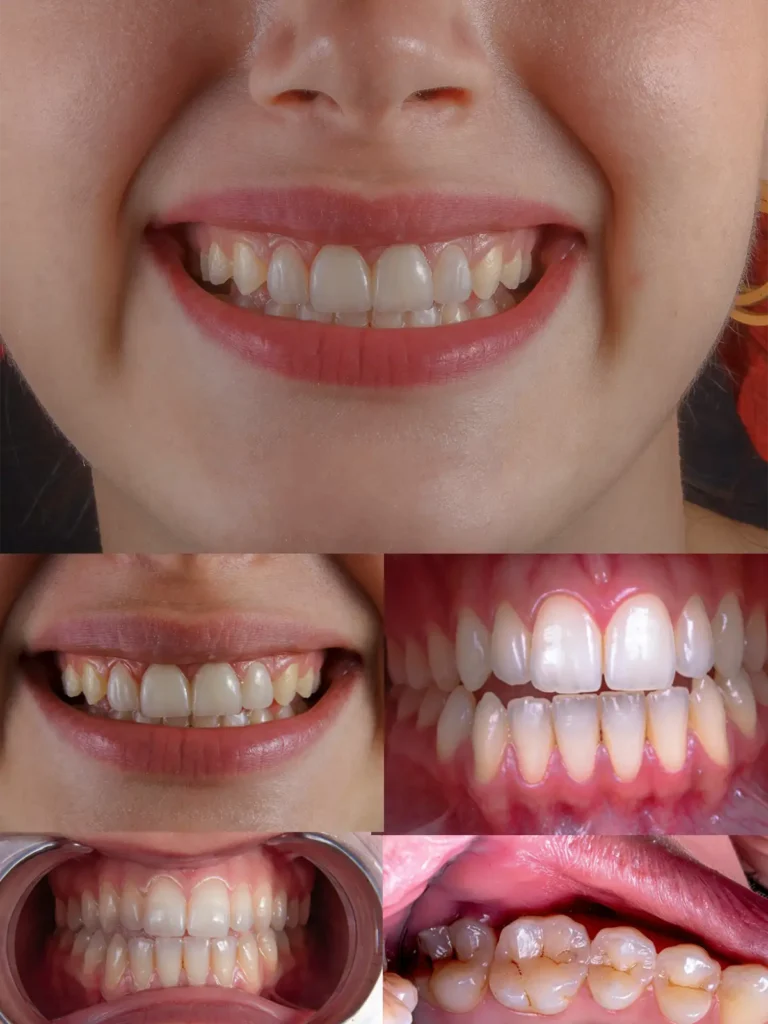
After a year without proper brushing, it is no longer useful to think of the problem simply as “dirty teeth”.
Several different problems may be developing at the same time:
| Problem | What may be happening |
|---|---|
| Plaque | Bacterial biofilm remains on the teeth and gumline. |
| Tartar | Hardened deposits have accumulated. |
| Gingivitis | The gums are inflamed and may bleed. |
| Tooth decay | Repeated acid attacks have damaged tooth structure. |
| Periodontitis | In susceptible people, deeper tissues supporting the teeth may be damaged. |
| Gum recession | Gum tissue may have moved away from parts of the teeth. |
This is not a guaranteed timeline. Some people develop disease faster than others, while some may have surprisingly few symptoms despite significant problems.
After several years
Over several years, untreated decay and gum disease can become much more difficult to manage.
A cavity can become larger and eventually reach the nerve inside the tooth. Periodontitis can cause loss of attachment and supporting bone. Teeth may become loose, shift position or become impossible to save.
At that point, treatment may involve more than preventive cleaning. Depending on what has happened, a patient may need fillings, root canal treatment, periodontal treatment, crowns, extraction or replacement of missing teeth.
The NHS notes that severe gum disease can require treatment below the gumline and, in some cases, tooth removal or gum surgery.
What Happens If You Don’t Brush Your Teeth at Night?
Night-time brushing matters because it removes the plaque accumulated during the day before your longest period without brushing.
UK guidance specifically recommends brushing last thing at night or before bed, as well as once more during the day.
Missing one night won’t suddenly cause a cavity. The concern is making it a habit.
The same applies to brushing before or after breakfast. The exact breakfast timing is less important than maintaining a consistent twice-daily routine. If you’ve been worrying about whether you’re brushing at the “perfect” time but regularly skip brushing before bed, the bedtime brushing deserves more attention.
Can Not Brushing Your Teeth Cause Cavities?
Yes, it can increase the risk of tooth decay.
Cavities develop through an interaction between bacteria, dietary carbohydrates, the tooth surface, saliva and time. When bacteria in plaque produce acids, those acids can gradually remove minerals from enamel.
Fluoride helps counter this process, which is one reason fluoride toothpaste is so important.
However, brushing isn’t the only factor. Someone who brushes twice a day but frequently sips sugary drinks can still have a high risk of decay.
Once a true cavity has formed and tooth structure has been lost, brushing cannot simply rebuild it. Early mineral changes may sometimes be managed with preventive care, but an established cavity may require a filling or other treatment.
Can Not Brushing Your Teeth Cause Gum Disease?
Yes. Plaque around the gumline can cause gingivitis, which commonly causes redness, swelling and bleeding.
The important distinction is between gingivitis and periodontitis.
Gingivitis affects the gums and is generally easier to control.
Periodontitis affects the structures that support the teeth. If it progresses, supporting bone and attachment can be lost, potentially causing teeth to become loose.
Starting to brush again is essential, but it cannot simply regenerate bone that has already been lost. Established periodontal disease may require professional treatment.
Why Can You Have Serious Dental Problems Without Pain?
Because pain doesn’t always appear when dental damage begins.
Early tooth decay can have no obvious symptoms. Gum disease can also progress without severe pain.
You might notice bleeding gums, bad breath, sensitivity or a change in how your teeth feel before developing a toothache.
This is one reason regular dental examinations are useful. A dentist can identify problems that aren’t obvious when you look in the mirror, including decay in difficult-to-see areas, tartar below the gumline and signs of periodontal disease.
A sudden change in pain doesn’t necessarily mean a tooth has healed either. If the nerve inside a badly damaged tooth becomes severely compromised, the pain can change or disappear while the underlying problem remains.
Can You Reverse the Damage From Not Brushing?
Sometimes, but it depends on what has happened.
Soft plaque: usually removable with effective brushing and interdental cleaning.
Gingivitis: can often improve when plaque control improves and appropriate professional care is provided.
Tartar: cannot simply be brushed away once hardened. Professional cleaning may be needed.
Early enamel damage: may sometimes be managed with fluoride and better plaque control before a cavity develops.
A cavity: brushing can help prevent further decay, but it cannot replace lost tooth structure.
Periodontitis: can be treated and controlled, but lost supporting bone does not simply grow back because you start brushing again.
That difference is worth understanding. Restarting good oral hygiene can stop you making things worse, but it doesn’t necessarily undo damage that has already occurred.
What Should You Do If You Haven’t Brushed Your Teeth for a Long Time?
Start again, but don’t attack your teeth with excessive force.
Use a soft or medium-bristled toothbrush and fluoride toothpaste. Brush all tooth surfaces and along the gumline for about two minutes, twice a day.
For adults in the UK, guidance recommends toothpaste containing 1,350–1,500 ppm fluoride. After brushing, spit out the excess rather than immediately rinsing with water.
Clean between your teeth once a day using floss or appropriately sized interdental brushes.
If you have months or years of neglect behind you, book a dental examination rather than trying to work out the condition of your teeth yourself.
You may need nothing more than improved home care and professional cleaning. Or there may be decay or gum disease that needs treatment. The examination tells you which situation you’re actually dealing with.
When Should You See a Dentist?
Arrange a dental appointment if you have:
- Repeated bleeding from the gums
- Red or swollen gums
- Persistent bad breath
- Tooth sensitivity
- Visible holes or dark areas
- Pain when biting
- Receding gums
- Loose or shifting teeth
- Pus around the gums
- Swelling around a tooth
- Symptoms that keep returning
Don’t wait for pain before getting checked if you’ve neglected your oral hygiene for a long time.
Seek urgent dental or medical help for significant facial swelling, difficulty breathing or swallowing, or a rapidly worsening dental infection.
Frequently Asked Questions
No. Mouthwash can be an addition to your routine, but it doesn’t provide the same physical plaque removal as brushing. If you use fluoride mouthwash, avoid using it immediately after brushing because it can wash away the concentrated fluoride left by your toothpaste.
Not necessarily. Both can be effective when used properly. Some people find an electric toothbrush easier for thorough cleaning, particularly if hand movement or technique is difficult.
If the roughness doesn’t disappear with brushing, it may be tartar rather than soft plaque. Scrubbing harder won’t reliably remove hardened calculus, so professional assessment may be appropriate.
A dentist cannot determine exactly how many times you’ve missed brushing, but plaque, tartar, gum inflammation, decay and periodontal changes can provide useful information about your current oral health.
Tell your dentist or hygienist. They may recommend a powered toothbrush, a different brush handle, interdental aids or other adaptations that make daily cleaning easier.
Concerned About the Effects of Not Brushing Your Teeth?
Missing brushing occasionally or neglecting your oral hygiene for a longer period can allow plaque to build up, increasing the risk of tooth decay, gum problems and bad breath. Our dental team can assess the condition of your teeth and gums and recommend appropriate care based on findings.
If it has been a long time since you last brushed regularly or visited a dentist, or you are experiencing bleeding gums, tooth sensitivity or pain, book an examination to find out what treatment, if any, you may need.