
Many people considering a smile makeover come across two popular options: veneers and the so-called “Turkey Teeth” trend.
At first glance, they may seem similar both aim to create whiter, straighter smiles. But the process, tooth preparation, and long-term impact are very different, and misunderstanding these differences can lead to unrealistic expectations.
We are going to break it down exactly how veneers compare with Turkey Teeth so you can make a more informed decision before committing to treatment.
What People Think They’re Getting vs Reality
A major source of confusion comes from how marketers present treatments online.
What patients often think:
- “Turkey Teeth = veneers”
- “Quick cosmetic improvement with minimal drilling”
- “Same treatment, just cheaper abroad”
While Turkey Teeth may seem like an attractive option, it’s important to fully understand The Hidden Problems With Turkey Teeth before making a decision. Additionally, read the Winchmore Dental guide on Turkey Teeth risks and safe alternatives.
What often happens in reality:
- Many “smile packages” rely on full crowns instead of veneers
- Teeth may be significantly reshaped to fit restorations
- Treatment is often completed quickly across multiple teeth at once
Crowns and veneers are fundamentally different treatments, especially in how much natural tooth is preserved.
Veneers vs Turkey Teeth: Key Differences
Veneers
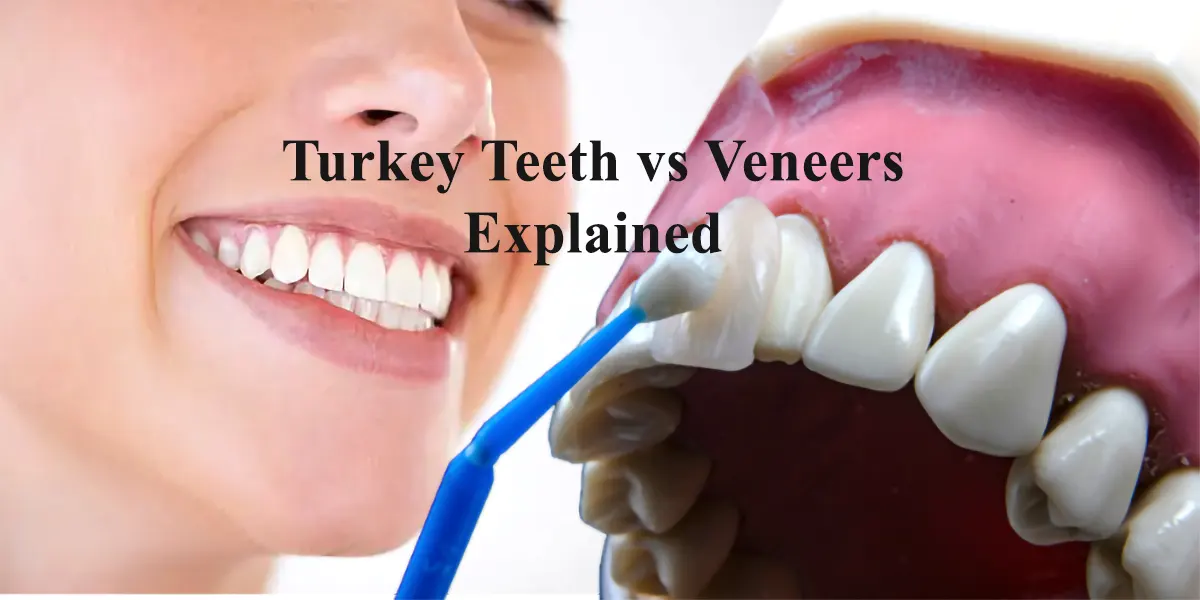
- Thin porcelain shells bonded to the front of teeth
- Minimal enamel removal
- Focused on cosmetic enhancement
- Preserves most natural tooth structure
- Carefully designed per patient
Turkey Teeth (Crowns-based approach)
- Full coverage restorations
- Tooth reshaping on all sides
- Requires significant reduction of natural structure
- Often used across full smile sets
- More invasive by design
| Feature | Veneers | Turkey Teeth (Crowns Approach) |
|---|---|---|
| Tooth Preparation | Minimal | Significant reduction |
| Coverage | Front surface only | Entire tooth |
| Reversibility | Limited but conservative | Irreversible |
| Aesthetic Control | Highly customised | Often uniform look |
| Purpose | Cosmetic enhancement | Full structural coverage |
| Tooth Preservation | High | Low |
Cost Comparison (General Overview)
| Treatment | UK Cost Range | Abroad Cost Range |
|---|---|---|
| Veneers | £6,000 – £25,000+ | £3,000 – £10,000 |
| Crowns (Full Smile) | £8,000 – £30,000+ | £3,000 – £8,000 |
Overseas treatment may look cheaper upfront, but you should always consider long-term maintenance and any potential corrective work.
Aesthetic Differences
Veneers:
- Designed to blend with facial features
- More natural translucency
- Individual tooth shaping
Turkey Teeth style crowns:
- Very uniform appearance
- Extremely bright white shade common
- Can sometimes look “block-like” if over-standardised
The difference often comes down to customisation vs standardisation
Who Are Veneers Actually For?
Veneers are typically used for:
- Discolouration
- Minor gaps
- Small chips or uneven edges
- Cosmetic smile refinement
Dentists design them for patients who already have healthy teeth but want aesthetic improvement.
Why Crowns Are Used in “Turkey Teeth” Cases
Dentists usually choose crowns when:
- Damaged Teeth
- Large fillings or decay exist
- Structural support needed
In cosmetic tourism cases, dentists sometimes use crowns more broadly to achieve aesthetic uniformity rather than for strict medical necessity.
The Key Decision Factor
The most important difference is not appearance it’s:
How much of your natural tooth is preserved
- Veneers = preserve structure
- Crowns = replace structure
This is what determines long-term flexibility and reversibility.
If you’re considering a smile makeover, consult our qualified dental professional at North Square Dental Practice to understand which treatment is most suitable for your teeth, bite, and long-term oral health.